


































RAHIM YAR KHAN: PTI President Parvez Elahi has turned out to be helpful to the Sharifs. This is because the Sharifs have been able to restart three of their sugar mills in South Punjab as a result of a law that was passed by the Punjab Assembly in November 2022, during Elahi’s tenure as the provincial chief minister.
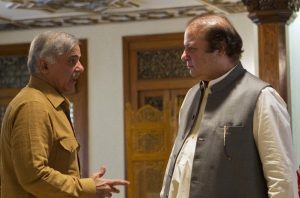
Nawaz Sharif, then prime minister, and his brother, then Punjab chief minister, Shehbaz Sharif, were unable to move three of their sugar factories to South Punjab in October 2016 due to an injunction issued by Justice Ayesha Malik of the Lahore High Court.
After hearing several petitions, including one from sugar tycoon and former PTI leader Jahangir Khan Tareen, Justice Ayesha gave this ruling.
North Punjab’s Ittefaq, Haseeb Waqas, and Chaudhry sugar mills have been relocated to the cities of Bahawalpur, Muzaffargarh, and Rahim Yar Khan, respectively.
After the Sharifs filed an appeal against the LHC’s ruling, the Supreme Court dismissed the petition and ordered the mills to be moved back to their original locations in 2018.
The Punjab Industries (Control on Establishment and Enlargement) Amendment Act, 2022 was passed by the Punjab Provincial Assembly during the tenure of Parvez Elahi, who is widely considered as a lifelong opponent of the Sharifs.
After receiving approval from the Punjab Governor, the bill was signed into effect on November 14, 2022, allowing sugar mills in the province to legally relocate and increase their sugar cane crushing capacity.
The review appeals filed by the Sharifs against the SC’s 2018 ruling resumed hearing in February of this year, but the caretaker Punjab government and Tareen told the court that they wished to drop their petitions.
The three-judge panel (Justices Ijazul Ahsan, Munib Akhtar, and Sayyed Mazahar Ali Akbar Naqvi) had already voiced their displeasure with this about-face.
The Punjab Industries and Commerce Department testified before the court that the problem of the sugar mills’ relocation had been settled as a result of legislation passed by the Punjab Assembly.
Even while Parvez Elahi weathers a legal onslaught numbering in the dozens, his political opponents are reaping the benefits of legislation enacted during his tenure by restarting their sugar mills.
After two or three days of cleaning and maintenance, the boilers at Chaudhry Sugar Mills, Haseeb Waqas Sugar Mills, and Ittefaq Sugar Mills have been fired up for the crushing test.
When cotton was the primary crop in some regions of Punjab, the provincial government enacted legislative limits on sugarcane farming in 2005.
However, as the number of sugar mills in Southern Punjab has increased, cotton production has decreased from 14 million bales in 2005 to 5 million bales in 2023.
The total amount of cotton grown and harvested in Punjab has gone up this year.
The government claims that cotton production is up 70% in 2023. But even at this reduced rate, it is still 65% lower than in 2005. As it is, the Rahim Yar Khan area only dedicates about 900,000 acres to cotton farming.
When three more sugar mills start growing sugarcane, it will have a major effect on other crops like cotton and wheat.
The Sugar Gang
Truth be told, Pakistan’s sugar business is probably the most important and strong lobby in the country. Nearly every one of the 91 sugar mills in the country is owned by a politician or politician’s family.
This prominent and strong lobby had been fighting amongst themselves for the past six years, and the reasons were all political. But in the past year, a lot has shifted.
The PTI has fallen apart, and the partnership between the PPP and the PML-N shows that the sugar lobby, which had been divided because of politics, has once again united because of politics.