























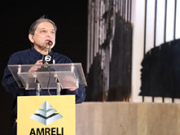






Murtaza Solangi, the interim Federal Minister of Information, reaffirmed on Sunday that Gilgit-Baltistan is experiencing “calm” law and order and that “peace and stability” has returned to the area.
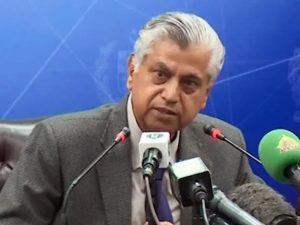
The minister took to X (previously Twitter) to relay a statement released by the G-B’s home department the day before, in which they called “baseless” media claims regarding the deployment of the army in the region to quiet the disturbance there for approximately a week.
According to the announcement, the G-B administration had requested the Pakistan Army and civil armed forces to provide security during next week’s chehlum of Imam Hussain (RA).
To keep the peace, safeguard people and property, and forestall any unfortunate occurrence, he referred to a statement from the G-B home department and said that Section 144 of the Code of Criminal Procedure, 1898 had been applied throughout the region.
Solangi mentioned the G-B was at “peace and stability” in a different post.
All signs of normalcy, including schools, universities, marketplaces, and streets, remain present. He also said that while there have been occasional instances of peaceful rallies in response to religious and sectarian concerns, the overall law and order situation has been stable.
Reports of unrest in G-B were also dismissed as “baseless” by the ministry. He insisted that there were no gunshots heard nearby. He also noted that no buildings or homes were damaged.
Protests were handled calmly in G-B, and they represent a natural political democratic response to local issues. “G-B is still a place of tranquilly and cooperation,” he said.
On Sunday, Solangi used video snippets to back their statements that life has returned to normal in Gilgit-Baltistan (G-B). These images showed businesses open for business and traffic moving freely, giving the appearance that normal life was returning to the area.
Mohyuddin Ahmad Wani, the Chief Secretary of G-B, has made similar statements, claiming that the situation in G-B is still “peaceful” and vehemently rejecting the presence of any military forces there. He emphasised that all main roads and highways were open, and that there were no orders to deploy the military in G-B.
The impending Chehlum of Imam Hussain (RA) would be a major test for the military, but he assured everyone that the forces were ready.
All public and private transport vehicles on the Karakoram Highway en route to Rawalpindi and Islamabad were ordered by the G-B government to leave their stations as soon as possible in an effort to reach Raikot Bridge by 11 am.
The G-B government has reportedly applied Section 144 in Diamer’s Chilas, which prohibits the public display of firearms, aerial gunfire, religious meetings, and attempts to disrupt highways during protests. It was also said that the government had planned to send Rangers, G-B Scouts, and Frontier Corps members to the region’s major cities.
Recent protests in Chilas prompted these safety precautions when demonstrators barricaded the Karakoram Highway and Babusar Pass for three days. They wanted a religious figurehead from Skardu arrested for making some apparently offensive comments. An FIR was filed against the religious leader, and protests in Astore and Gilgit subsided.
As a result of these incidents, the people of Skardu went on a market and transit strike, blocking major roads including the Juglot-Skardu Road. To guarantee the safety of travellers and keep traffic moving freely, the government of Great Britain stationed the Karakoram Task Force and police on the Karakoram Highway, the Juglot-Skardu Road, and Babusar Top.